
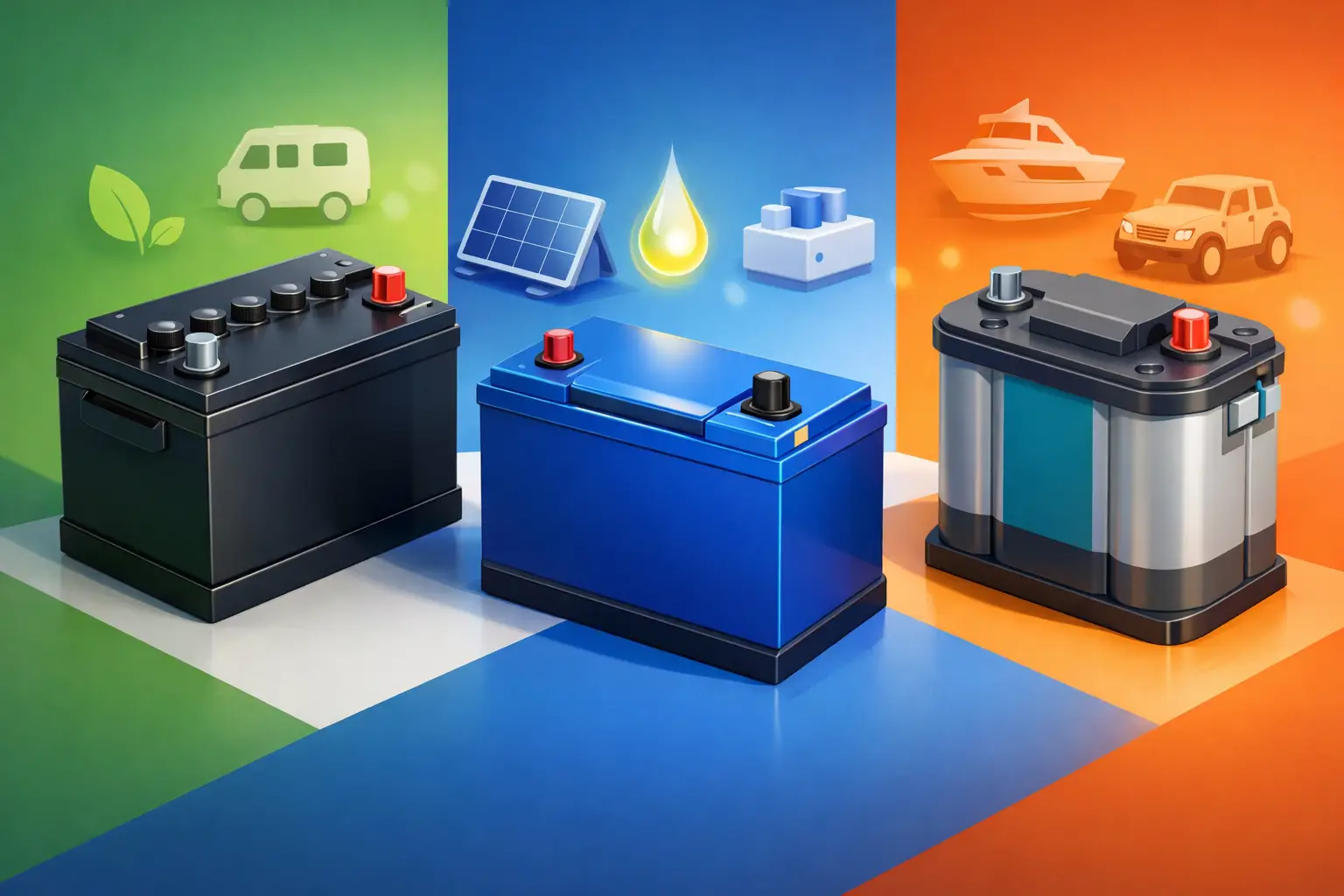
If your battery has to do more than crank an engine for a few seconds, the usual starting battery is often the wrong tool for the job. Deep cycle batteries are built to deliver steady power over longer periods, which makes them the better fit for caravans, marine setups, camping gear, work vehicles and auxiliary systems in trucks and utes.
That sounds simple enough, but choosing the right battery gets messy quickly. Capacity, battery chemistry, charging setup, temperature, vibration and how often you discharge it all matter. Get the match wrong and you can end up with short battery life, poor performance and gear that lets you down when you need it most.
What deep cycle batteries actually do
A starting battery is designed for short, high-current bursts to turn the engine over. Once the vehicle is running, the alternator takes over. A deep cycle battery is different. It is built to be discharged and recharged repeatedly while supplying a lower, steady current over time.
That makes deep cycle batteries suitable for running loads like lights, inverters, fridges, pumps, communication gear and trailer accessories. In commercial use, they are often part of an auxiliary power setup rather than the main cranking system. In some cases they support equipment in mobile service bodies, sleeper cabs, emergency vehicles or marine applications where constant accessory power matters more than engine starting.
The key point is this: a deep cycle battery is not just a bigger battery. It is designed for a different job.
The main types of deep cycle batteries
There is no single best battery for every vehicle or application. The right choice depends on how the battery will be used, how it will be charged and what sort of environment it works in.
Flooded lead-acid
This is the traditional option and usually the lowest-cost entry point. Flooded batteries can be a practical choice where budget matters and maintenance is not a problem. They are common in marine and industrial settings, but they need ventilation and periodic checking.
For many vehicle owners, the trade-off is simple. They are cheaper upfront, but they are less forgiving if neglected and not ideal where space is tight or access is awkward.
AGM batteries
AGM stands for Absorbent Glass Mat. These batteries are sealed, generally more resistant to vibration than flooded types and widely used in 4WDs, caravans, work utes and commercial vehicles. They are popular because they are practical, proven and easier to live with in mobile applications.
AGM batteries suit plenty of auxiliary setups, especially where the charging system is compatible and the battery is not being pushed too hard every day. They are still sensitive to undercharging and excessive heat, so installation quality matters.
Gel batteries
Gel batteries are another sealed lead-acid option. They can perform well in some specialised applications, but they are less common in general automotive setups than AGM. Charging needs to be correct, and not every system is set up for them.
Unless there is a clear reason to use gel, most vehicle owners looking for a dependable auxiliary battery will usually compare AGM and lithium first.
Lithium batteries
Lithium deep cycle batteries, usually lithium iron phosphate in vehicle applications, have become a serious option for anyone who wants lighter weight, faster charging and more usable capacity. They can deliver strong performance and often last longer than lead-acid batteries when properly managed.
The catch is price and compatibility. Lithium costs more upfront, and the charging system has to suit it. In some vehicles that means adding or upgrading a DC-DC charger and checking that all protection and monitoring gear is correctly configured. For fleet operators and regular users, the higher upfront spend can make sense. For occasional use, it depends on budget and how much the setup is actually used.
How to choose the right battery size
Battery size is where plenty of people come unstuck. Bigger is not automatically better, and smaller usually means disappointment.
Start with the loads. If you are running a fridge, lights and a few chargers overnight, that is a different job from powering a work body, inverter, pumps and comms gear every day. Capacity is usually measured in amp-hours, but the useful number is how much energy you will genuinely use between charges.
Then consider discharge depth. A lead-acid battery generally lasts longer if you do not flatten it regularly. Lithium can usually handle a deeper discharge, which means more of its rated capacity is actually usable. That is one reason a smaller lithium battery can sometimes perform like a larger AGM in real use.
Charging time matters too. If the vehicle only does short trips, a large battery bank may never be properly recharged from normal driving. In that case, the battery is not the only issue. The charging setup needs attention as well.
Charging matters more than most people think
A good battery with poor charging will still fail early. This is one of the most common issues in auxiliary systems, especially in newer vehicles with smart alternators.
Modern charging systems do not always deliver what an auxiliary battery needs. A simple isolator setup that worked fine on an older ute may not properly charge a deep cycle battery in a newer vehicle. That is where DC-DC chargers often come in. They help regulate charging voltage and current so the battery gets the charge profile it actually needs.
Mains charging also matters if the battery spends time parked up. A proper multi-stage charger matched to the battery type can make a noticeable difference to battery life. Solar can help as well, but only if the panel size, regulator and daily usage make sense together.
There is no point buying premium deep cycle batteries if the vehicle or trailer is set up to undercharge them from day one.
Deep cycle batteries in commercial vehicles
For commercial operators, battery choice is usually about uptime, not theory. If a battery powers tail lifts, interior lighting, communication gear, refrigeration support equipment or mobile workshop accessories, reliability is the priority.
That changes the conversation. The cheapest battery is rarely the cheapest option once call-outs, downtime and replacement frequency are factored in. A battery in a heavy vehicle or fleet environment also has to cope with vibration, long operating hours and inconsistent charging conditions.
This is where correct system design matters. Cable sizing, mounting, battery isolation, charger selection and load assessment all affect how well the setup performs. In many cases, repeated battery failure is not a battery brand problem at all. It is a charging or installation problem.
For Auckland fleet operators and tradies, that is usually the practical takeaway: treat the battery as part of the electrical system, not a standalone product.
Common mistakes that shorten battery life
The most common mistake is discharging the battery too far, too often. Lead-acid batteries especially do not like being left flat. Even one deep discharge can do damage, and repeated neglect shortens life quickly.
The next issue is undercharging. A battery that never reaches full charge slowly loses performance. Sulphation in lead-acid batteries is a common result, and once that sets in, capacity drops off.
Heat is another problem. Batteries mounted in hot engine bays or poorly ventilated spaces tend to have a harder life. Vibration also matters, particularly in trucks, trailers and off-road applications. A battery that is not properly secured can fail earlier than expected, even if the electrical setup is sound.
Then there is mismatch. Using the wrong charger profile, mixing old and new batteries in the same bank, or pairing different battery types together can create ongoing trouble.
When AGM makes sense and when lithium is worth it
If you want a dependable, proven option for moderate auxiliary use, AGM is still a sensible choice. It works well in many utes, 4WDs, caravans and service vehicles, and the upfront cost is easier to swallow.
If weight matters, charging speed matters, or you need more usable power in a smaller footprint, lithium starts to look far more attractive. It can also make sense for regular users who cycle the battery often and want longer service life.
There is no blanket answer. For occasional weekend use, AGM may be perfectly adequate. For daily commercial use or higher-demand setups, lithium may save money over time even if the purchase price is higher.
Getting the setup right the first time
A battery should match the job, the vehicle and the charging system. That means looking at real-world loads, not rough guesses, and making sure the installation is suited to the battery chemistry you choose.
For vehicle owners who use auxiliary power regularly, it is worth getting the setup checked properly rather than replacing batteries one after another and hoping for a better result. Businesses like Simms Electrical see this often with work vehicles and fleet units where the battery is blamed, but the real issue sits elsewhere in the system.
The right deep cycle battery should give you dependable service, not constant second-guessing. If your vehicle or equipment relies on stored power to keep working, choose the battery the same way you would choose any critical part – based on load, charging and reliability, not just sticker price.
A battery that suits the job properly is one less thing to worry about when the day is already full enough.