
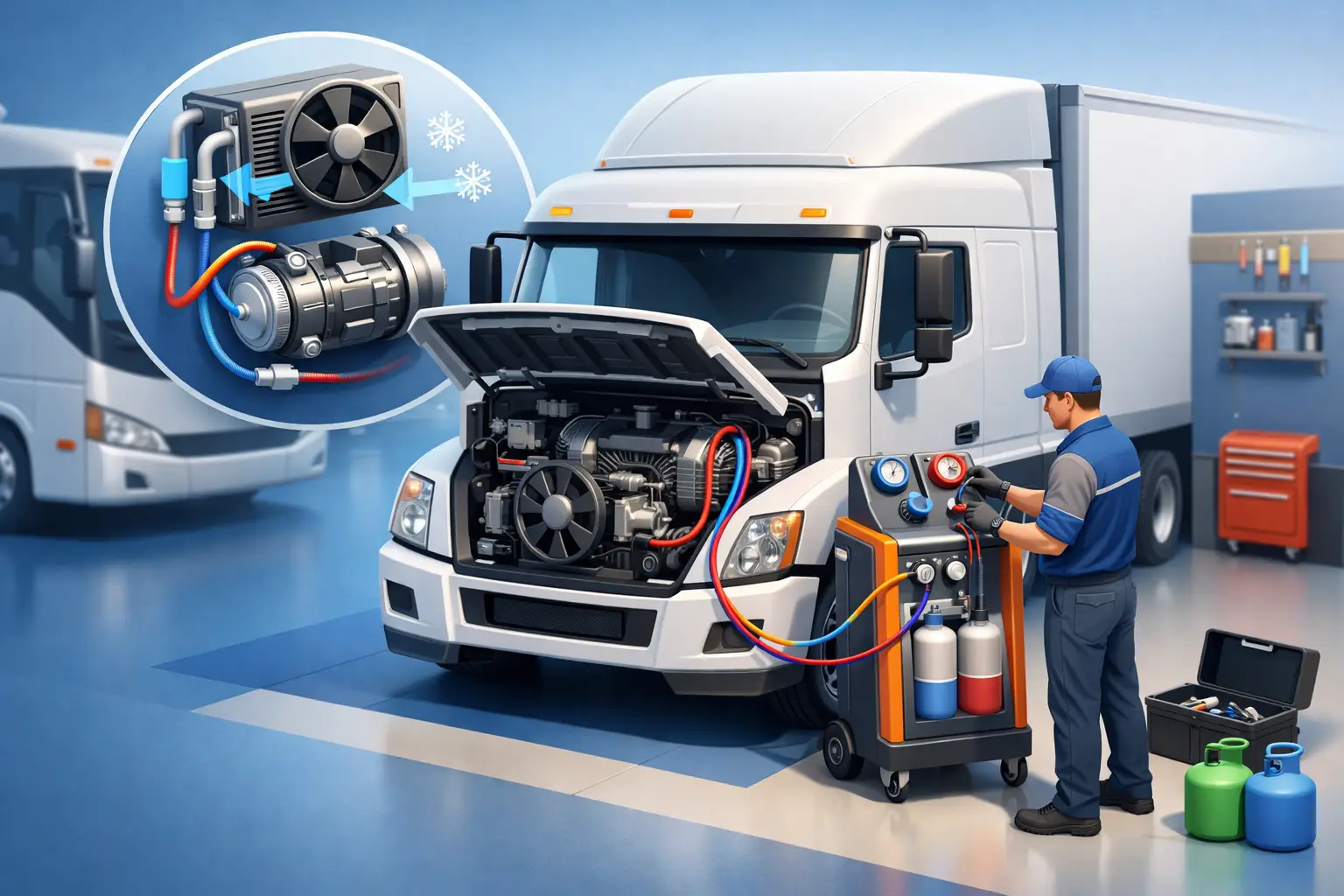
When the cab air con drops out in a truck, van or ute, it is not just an annoyance. For drivers covering long hours, stop-start metro runs or freight work across Auckland, poor cooling quickly becomes a comfort issue, a safety issue and a downtime issue. Commercial vehicle air conditioning repair needs to be handled properly because the fault is often tied to electrical, mechanical and control system problems that do not show up in a basic regas.
A commercial system works harder than a passenger vehicle system. It deals with longer run times, more idling, more vibration, heavier use of blowers and controls, and often a vehicle that cannot afford to sit in a queue waiting for trial-and-error repairs. That is why the right repair process matters. You need accurate diagnostics, the right parts and a repairer who understands commercial vehicles, not just cars.
Why commercial vehicle air conditioning repair is different
On a private car, an air con issue might be an inconvenience for school runs or weekend driving. On a commercial vehicle, it can affect driver concentration, fatigue and the ability to keep a vehicle in service for the day. A truck stuck in traffic with no cooling in the cab is not something most operators want to repeat.
There is also the question of access and application. Many commercial vehicles have tighter engine bays, modified bodies, sleeper cabs, rear units or added electrical loads that complicate diagnosis. A fault may sit in the compressor circuit, pressure switches, condenser fan operation, evaporator controls, wiring, relays or control head. Sometimes the system has low refrigerant because of a leak. Sometimes it has the right charge but still does not cool because the electrical side is failing.
That is where specialist testing pays off. A proper inspection does more than check vent temperature. It looks at pressures, compressor engagement, airflow, fan performance, sensor inputs and circuit integrity so the repair is based on evidence, not guesswork.
Common faults in commercial vehicle air conditioning systems
The most common issue is refrigerant loss from leaks, but that is only one part of the picture. Hoses, seals, condensers and service ports can all develop leaks over time, especially on vehicles exposed to road grime, vibration and constant use. Recharging a leaking system without finding the source usually means the same vehicle comes back with the same complaint.
Compressors also wear out, particularly on higher-hour vehicles. A failed compressor might not engage at all, or it may engage but fail to circulate refrigerant properly. In some cases, compressor failure spreads debris through the system, which means a simple part swap is not enough. The system may need flushing and additional component replacement to avoid repeat failure.
Electrical faults are another frequent cause. Blown fuses, failed relays, damaged wiring, poor earths, pressure sensor faults and control panel issues can all stop an air con system from operating as it should. This is especially relevant in commercial vehicles where electrical accessories, trailer connections and added aftermarket equipment can complicate circuits.
Airflow problems are easy to miss but can be just as disruptive. A blocked cabin filter, failing blower motor, condenser fan issue or clogged evaporator can make the system seem weak even when the refrigerant side is working. If the fan speed is inconsistent or airflow is poor from the vents, the fault may not be in the gas charge at all.
Signs your vehicle needs repair, not just a service
If the air con is blowing warm air all the time, the system clearly needs attention. But there are other signs that often point to a developing fault before complete failure. Cooling that fades during the day, noisy compressor operation, bad smells through the vents, intermittent function and misting that does not clear properly all deserve inspection.
A system that cools while driving but struggles at idle can indicate condenser airflow issues, fan faults or pressure problems. A system that works one day and not the next may suggest an electrical fault rather than simple low refrigerant. If the compressor is cycling rapidly, there may be a pressure or sensor issue behind it.
For fleet operators, the key is not to wait for a total loss of cooling. Early diagnosis usually keeps the repair simpler and helps avoid larger component damage.
What a proper commercial vehicle air conditioning repair should include
Good repair work starts with fault finding. That means checking system pressures, testing for leaks, inspecting compressor operation, confirming fan and blower performance, and carrying out electrical diagnostics where required. On modern vehicles, that may also include scan tool work to check related modules and sensor data.
Once the fault is identified, the repair should match the actual cause. If there is a leak, it needs to be repaired before the system is recharged. If a compressor has failed, the rest of the system needs to be assessed for contamination. If the issue is electrical, the repair should address the faulty circuit or component rather than replacing parts on assumption.
This is where commercial customers benefit from dealing with an auto electrical specialist. Air con systems are not isolated from the rest of the vehicle. Compressor clutch control, pressure inputs, fan operation and cabin controls all rely on sound electrical diagnosis. A workshop that understands both sides of the system can usually get to the fault faster.
Workshop repair or mobile support
It depends on the job. Some commercial vehicle air conditioning repair work can be assessed or handled on site, especially if the problem is electrical, control-related or part of a wider vehicle fault. Mobile support is useful when the vehicle cannot easily leave site or when downtime needs to be reduced.
Other jobs are better completed in a workshop environment. Leak detection, component replacement, system evacuation and recharge, and repairs requiring more time or specialised equipment are often more efficient in the workshop. The right service provider should be able to tell you quickly which option makes sense instead of forcing every job into the same process.
For Auckland operators managing trucks, trailers, vans and service vehicles, that flexibility matters. It can be the difference between a vehicle being off the road for a full day and getting the issue sorted with minimal disruption.
Preventing repeat air con failures in fleets
Fleet air con problems rarely happen in isolation. If one vehicle has a leak, poor condenser airflow or a failing compressor, there is a fair chance other units with similar age and use are not far behind. That is why a reactive approach can get expensive.
Scheduled checks help catch faults before they become breakdowns. That does not mean every vehicle needs major work every time. It means inspecting performance, identifying early leaks, checking drive belts and electrical connections, and making sure filters and fans are doing their job. A small repair done early is usually cheaper than a major system failure in peak summer.
It also helps to keep records. If a vehicle has had multiple regas jobs without a confirmed leak repair, the underlying issue has not been fixed. If one model in the fleet keeps showing the same weakness, it may need closer inspection as part of regular servicing.
Choosing the right repairer
Not every workshop is set up for commercial air con work. Some are geared toward passenger cars and quick regas jobs. That can be enough for simple maintenance, but it is not always enough for trucks, fleet vehicles or recurring faults.
A better fit is a provider with commercial vehicle experience, proper diagnostic equipment and the ability to handle related electrical faults at the same time. Fast response matters too. When a working vehicle loses air con, especially in warm conditions, you want a clear answer and a practical repair path, not delays and guesswork.
That is why many operators use specialists such as Simms Electrical for this type of work. The combination of workshop capability, mobile support and commercial vehicle knowledge is more useful than a one-size-fits-all service model.
If your cab is not cooling properly, the smartest move is to get it checked before the fault spreads or the vehicle ends up parked. Good air con repair is not about chasing colder air for a day. It is about keeping drivers comfortable, protecting uptime and getting the job done properly the first time.