
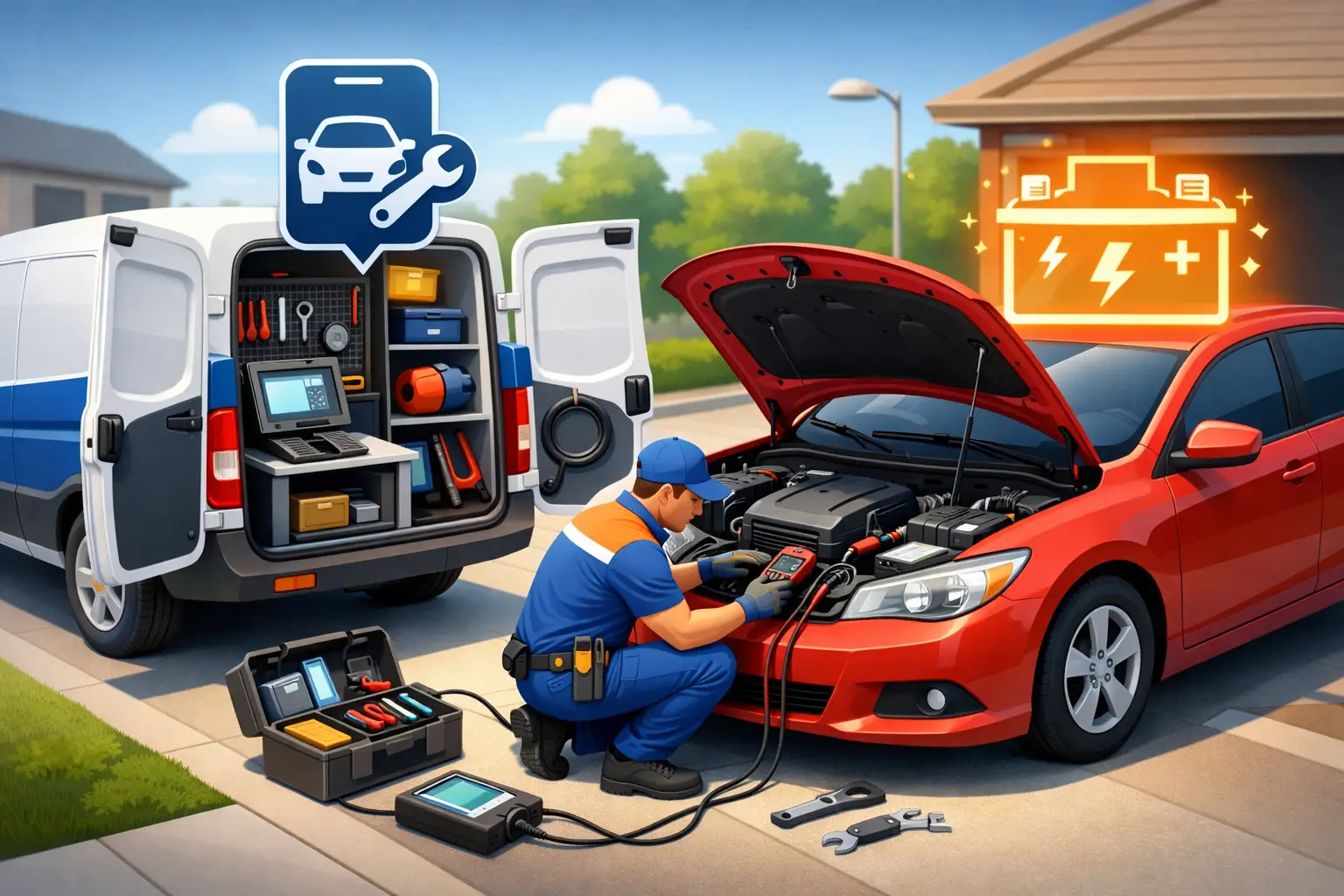
A truck won’t start at the yard at 5:30 am, a trailer has lost its lights before a delivery run, or a ute battery gives up in a worksite car park. That’s when a mobile auto electrician stops being a convenience and becomes the fastest way to get moving again. When the vehicle can’t come to the workshop, the workshop needs to come to the vehicle.
For fleet operators, tradies and everyday drivers, electrical faults rarely happen at a good time. They show up before a shift, during a delivery window, or when you’ve already lost enough time. The value of mobile support is simple – faster diagnosis, less towing, less downtime and a better chance of fixing the problem on the spot.
What a mobile auto electrician actually does
A mobile auto electrician handles electrical faults and component failures at your location instead of requiring the vehicle to be brought in first. That can mean a roadside call-out, support at a depot, repairs in a customer yard, or service at home. The work often includes battery testing and replacement, charging faults, starter motor issues, alternator problems, lighting repairs, trailer wiring faults, air conditioning electrical checks, alarm faults and general diagnostic work.
For commercial vehicles, the job is often more involved than a flat battery. Trucks and trailers rely on dependable lighting, charging systems, brake and auxiliary wiring, and accessories that need to work every day. A fault in one area can affect compliance, safety and schedules. A proper diagnosis matters more than a quick guess.
That’s where mobile service earns its keep. Modern diagnostic gear allows an experienced technician to trace faults properly on site, rather than swapping parts and hoping for the best. In many cases, the issue can be repaired then and there. If it can’t, you at least get a clear answer on what has failed and what needs to happen next.
When a mobile auto electrician makes the most sense
Not every electrical problem needs a call-out, but plenty do. If the vehicle won’t start, isn’t safe to drive, or is part of a working fleet that can’t afford extra downtime, mobile service is usually the practical option.
A dead battery is the obvious example, but it’s far from the only one. Charging issues are common and often get misread as battery failure. Replacing the battery may get you going for a short time, but if the alternator or wiring is at fault, the same problem returns quickly. The same applies to intermittent faults – lights dropping out, warning lights appearing and disappearing, accessories cutting in and out, or a trailer connection that works one day and fails the next.
For trucks, trailers and commercial vehicles, there’s also the question of access. Moving a heavy vehicle into a workshop isn’t always simple, especially if the fault affects starting, lights or essential electrical systems. Sending a mobile technician to the site can be faster and cheaper than organising towing, rescheduling jobs and waiting for workshop space.
Common jobs handled on site
A good mobile auto electrician is there to solve real faults, not just provide a jump-start. Battery supply and replacement is a major part of the work, particularly for fleets and vehicles with high daily demand. Testing matters here, because low voltage can be caused by battery condition, charging failure, parasitic drain or poor cable connections.
Lighting faults are another regular call-out, especially on trailers and work vehicles. Tail lights, marker lights, indicators, reverse lights and work lamps all take abuse from weather, vibration and corrosion. A fault that looks minor can put a vehicle off the road or create a safety issue quickly.
Starter and alternator problems are also well suited to mobile diagnosis. If a vehicle is clicking but not cranking, slow to turn over, or repeatedly going flat, the fault needs to be identified properly. The issue may sit with the battery, charging system, starter motor, cabling, earths or a combination of those.
For fleet and commercial customers, on-site support also helps with accessory and operational systems. That can include warning beacons, interior lighting, trailer plugs, battery isolation, alarms and other electrical components that affect day-to-day use. Not every repair is urgent, but getting it sorted on location often means less disruption to the workday.
Why diagnostics matter more than guesswork
Electrical faults can waste time fast if they’re handled by trial and error. One part gets replaced, the problem stays, then another part is fitted, and the vehicle still isn’t right. That approach costs money and keeps vehicles off the road longer than necessary.
A capable mobile auto electrician should arrive ready to test, not just replace. Voltage drop testing, battery analysis, charging checks and fault tracing are what separate proper repair work from temporary patch-ups. This is especially important on modern vehicles where multiple systems interact and a single electrical fault can trigger several symptoms.
Commercial operators feel this more than most. If one truck is down, jobs shift to another vehicle, schedules tighten and staff lose productive hours. If several vehicles have recurring electrical faults, the cost grows quietly in the background. Getting accurate diagnosis early is one of the easiest ways to protect uptime.
Mobile service versus workshop repairs
Mobile service is the right fit for many auto electrical problems, but not every job should be done on site. Some repairs need workshop conditions, more time, specialised bench testing or access to stock and equipment that can’t travel in a van.
That’s the trade-off. Mobile support is ideal for urgent faults, breakdowns, battery replacement, lighting repairs, trailer issues and many diagnostic jobs. Workshop repair can be the better option for larger rewiring work, more complex installations, or faults that need extended strip-down and testing.
The best service providers offer both. That matters because the right answer is not always the same day fix in the field. Sometimes the most efficient outcome is on-site diagnosis followed by workshop repair with the correct parts ready to go. Knowing the difference saves time and avoids repeat visits.
What commercial customers should look for
If you run trucks, trailers or a working fleet, response time matters, but it’s not the only thing that matters. You also need coverage, experience with commercial vehicles, and the ability to carry through from diagnosis to repair.
Look for a mobile auto electrician with real heavy vehicle knowledge, not just general automotive experience. Trailer wiring, fleet battery care, truck charging systems and work vehicle accessories all come with their own failure patterns and service requirements. A provider that understands those systems will usually find faults faster and avoid unnecessary downtime.
It also helps to work with a business that can support you beyond one call-out. Ongoing fleet checks, battery replacement planning, workshop backup and access to quality parts make a real difference over time. Fast service is useful. Consistent service is what keeps vehicles on the road.
Why local coverage matters in Auckland
Auckland traffic doesn’t leave much room for delays. If your vehicle is stuck in a depot, on a job, at home or between runs, waiting half a day for help can turn a manageable issue into a missed booking, a missed delivery or a full day lost.
That’s why local reach matters. A service with multiple vans on the road and broad Auckland coverage can often respond faster and more practically than a provider working from a single point. For businesses with vehicles spread across different suburbs or job sites, that coverage becomes even more important.
Simms Electrical works this way because that’s what customers actually need – same-day response where possible, proper diagnostics, and support for everything from private vehicles to trucks, trailers and fleet units.
Choosing the right mobile auto electrician
Price matters, but the cheapest call-out is rarely the cheapest outcome if the fault isn’t fixed properly. What you want is a technician who turns up prepared, understands the urgency, and can make a clear call on whether the job should be repaired on site or brought into the workshop.
Ask practical questions. Do they handle commercial vehicles? Can they test batteries and charging systems properly? Do they repair trailer lighting and wiring? Can they support fleets as well as one-off call-outs? Do they carry trusted parts and replacement batteries? These details tell you a lot before the van even arrives.
A good mobile service should reduce uncertainty, not add to it. You should come away knowing what failed, what was repaired, and what to keep an eye on next.
When a vehicle’s off the road, you don’t need marketing spin. You need someone who can get to you, find the fault and sort it properly. That’s what a mobile auto electrician is for, and when downtime costs money, that kind of support pays for itself quickly.