
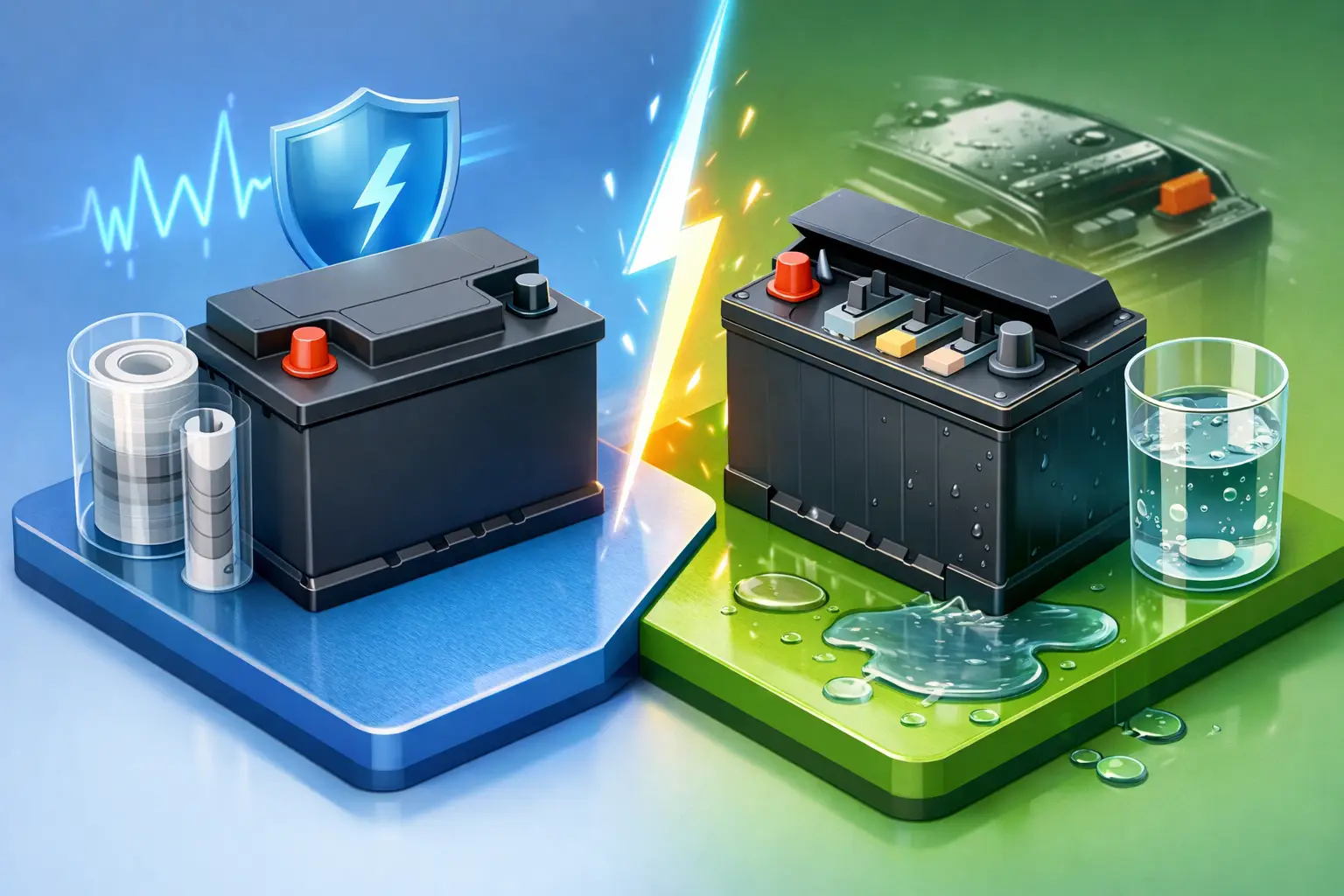
A battery that works fine in one vehicle can be the wrong choice in another. That is the real issue in the AGM vs flooded battery decision. If you run a ute, truck, trailer or fleet vehicle, the right battery is less about labels and more about how the vehicle is used, how often it sits, what it powers and how costly downtime is when it fails.
Both battery types are lead-acid batteries, but they are built differently and behave differently in service. One is not automatically better than the other. The better option depends on your charging system, vibration levels, accessory load and budget.
AGM vs flooded battery: what is the difference?
A flooded battery is the traditional style most drivers know. It contains liquid electrolyte that moves freely around the lead plates. These batteries are common because they are proven, widely available and usually cheaper to buy.
An AGM battery, short for Absorbent Glass Mat, still uses lead-acid chemistry, but the electrolyte is held in a fibreglass mat between the plates. That design makes the battery sealed, spill-resistant and generally better able to cope with vibration and repeated cycling.
In practical terms, a flooded battery is often the economical choice for standard starting duties. An AGM battery is often chosen where the electrical load is higher, the vehicle works hard, or reliability under tougher conditions matters more than the lowest upfront price.
Where flooded batteries still make sense
Flooded batteries are not old technology that should be ignored. In many vehicles, they are still the right fit. If the vehicle has a normal starting load, a healthy charging system and no heavy accessory demand, a quality flooded battery can do the job well.
They are often a sensible option for older vehicles designed around conventional batteries. They can also suit operators managing a larger fleet where replacement cost matters and the usage pattern is predictable. If a vehicle is driven regularly and the battery is mainly there to crank the engine, flooded can be good value.
That said, they do have limitations. They are more vulnerable to vibration, can lose water over time in some applications, and are usually less tolerant of being deeply discharged. If they are repeatedly run flat, their service life tends to drop quickly.
Where AGM batteries earn their keep
AGM batteries usually cost more, so they need a reason to justify that extra spend. In plenty of commercial and recreational setups, they do.
If a vehicle runs fridges, work lights, inverters, communication gear, winches or other accessories, AGM batteries often cope better. They are also a strong option where the battery is mounted in a position exposed to constant vibration, such as in heavy vehicles, off-road applications or work utes covering rough ground.
AGM batteries generally have lower internal resistance, which helps with strong starting performance and faster charge acceptance in the right system. They are also less prone to acid leakage and usually need less routine attention. For operators who value reliability and reduced maintenance, that can make a real difference.
The trade-off is cost, and sometimes compatibility. Not every charging system is ideal for AGM. Fit the wrong battery to the wrong vehicle and you can end up paying more for no gain.
Cost versus value
This is where many battery decisions go wrong. People compare shelf price and stop there.
A flooded battery is usually cheaper to purchase, which makes it attractive for straightforward applications. If it lasts well in that vehicle and does everything required, it may well be the better financial choice.
An AGM battery costs more upfront, but the value can stack up if it lasts longer in the actual operating conditions or prevents downtime. For a private car that gets used normally, the extra cost may not be worthwhile. For a service vehicle that starts early, runs accessories all day and cannot afford a roadside failure, the maths can look very different.
For fleet managers, this is not just about battery price. It is about total operating cost. One missed delivery, one call-out, or one truck off the road can wipe out any saving made by fitting the cheapest battery available.
Charging matters more than many people realise
The AGM vs flooded battery choice is not only about battery construction. It is also about whether the vehicle charges that battery correctly.
Flooded batteries are generally more forgiving in older systems. AGM batteries often need tighter control of charging voltage to perform at their best. Many modern vehicles can support them properly, but not all charging systems are equal, especially in modified vehicles or mixed fleet environments.
If the charging voltage is too low, an AGM battery may never fully recharge. If it is too high, battery life can suffer. This is one reason battery replacement should not be treated as a simple size match. The battery has to suit the vehicle, the alternator setup and the electrical load.
For vehicles with stop-start systems, battery management modules or significant aftermarket accessories, correct specification matters even more. Guesswork can become expensive.
Lifespan and durability
There is no honest single answer to which battery lasts longer. It depends on service conditions.
In stable, light-duty use, a flooded battery can last very well. In rougher conditions with heavy vibration, frequent cycling or long accessory use, AGM often has the edge. Its construction is generally tougher, and it usually handles repeated discharge and recharge better than a standard flooded starting battery.
Heat also plays a part. High under-bonnet temperatures can shorten battery life across both types. So can repeated short trips that never fully restore the charge. A battery that is technically premium will still fail early if the vehicle use pattern constantly leaves it undercharged.
That is why battery life should be judged in the real world, not by box claims alone.
Which battery suits which vehicle?
For a standard passenger car with typical daily driving and no major added accessories, a flooded battery is often perfectly adequate. It is cost-effective and easy to source.
For a 4WD, work ute or service vehicle running extra electrical gear, AGM is often worth considering. The same goes for trucks and commercial vehicles where vibration resistance and dependable starting matter.
For trailers with auxiliary power demands, the answer depends on whether the battery is mainly for starting, house loads or both. If the battery is regularly cycled, AGM may be the better match.
For fleets, there is rarely one answer across every vehicle. The smart move is to match battery type to duty cycle rather than standardising purely on price.
Signs you may be using the wrong type
If batteries keep failing early, the issue may not be brand quality alone. It may be that the battery type does not match the job.
Repeated low-voltage complaints, poor crank performance after sitting, swelling replacement costs, or batteries that struggle once accessories are fitted can all point to a mismatch. So can batteries that test as undercharged despite a functioning alternator.
This is where proper testing matters. A battery should be checked along with the charging system, current draw and overall vehicle condition. Replacing one battery with the same type again and again does not solve much if the application calls for something different.
How to make the right call
Start with the basics. Ask what the battery actually needs to do. Is it only starting the engine, or does it also support regular accessory loads? Does the vehicle spend time on rough roads? Is downtime a nuisance or a genuine business cost? Is the charging system suitable for AGM, or is a flooded battery the safer match?
Then look at the whole setup rather than the battery alone. Battery tray location, heat exposure, alternator performance, cable condition and parasitic draw all affect the result.
If you are unsure, it is worth getting the battery and charging system assessed by an auto electrician rather than picking by price or online opinion. For commercial vehicles especially, the right battery choice is a service decision, not just a parts decision. Simms Electrical sees this often with work utes, trucks and fleet vehicles where the battery has to match real operating demands, not just the catalogue listing.
A good battery is the one that suits the vehicle, the load and the way you use it. Spend where it counts, save where it makes sense, and treat battery selection as part of keeping the vehicle reliable – because that is exactly what it is.